
<!-- Editorial review, 2026-10-05 UTC: Read AI 新闻 A:F; five rows collected 2026-10-05 08:03 UTC. Spreadsheet identity and parent folder verified. Selected ThinkingBox, whose source displays October 3, 2026. Reflection's pending-model story overlaps yesterday's open-weight buying topic; remaining rows cover policy, data-center tax incentives and scientific cooperation. Primary intent: assess evidence for a companion chat-deletion action, distinct from local data-recipient and permission guides. Homepage, blog index, attempted chat-category pages, review methodology and privacy guidance inaccessible through web; curl DNS failed. Live duplication and internal-link currency remain unresolved for editor review. Internal destinations reuse local drafts; no current page-content claims. Source findings concern business workflows, not companion deletion. Consumer procedure is proposed and unperformed. No product review, backend audit or adult generation capability asserted. Cover prompt and generation method recorded in cover-prompt.txt. -->
AI Companion Chat Deletion: What Counts as Evidence?
Before choosing an adult AI companion, ask what its delete button actually removes. A message that says “done” can confirm a request without proving what happened behind the interface. Use a fictional chat to check visible behavior, then request an explanation of saved memory and retained copies. Prefer a clearly scoped answer over an unexplained promise of complete deletion.
Why ThinkingBox makes this a useful buyer question
The Microsoft and Hugging Face ThinkingBox announcement, published October 3, describes an evaluation of 507 business workflows, with each task run 20 times. It checks final backend records and side effects. These are the authors' reported benchmark results, not NSFWAITool tests or evidence about any companion service.
The relevant lesson is methodological: evaluate the outcome of an action. For a companion buyer, that suggests asking what evidence supports a deletion confirmation. This is an editorial application of the approach, not a finding that ThinkingBox tested adult chats. Write “deletion behavior unresolved” beside a candidate until you have evidence about that specific feature.
Start from candidates in NSFWAITool's AI tool directory and identify the exact action you care about. For example, deleting one conversation differs from closing an account. Ask the operator which action affects saved character preferences before paying for a plan that you expect to use with personal information.
Define the deletion you want before testing it
Write a concrete requirement: “After I delete this fictional conversation, it should disappear from my account's conversation history.” That requirement is observable. Add a separate question about backend retention if that matters to your decision. Keeping the scopes explicit prevents a disappearing chat from becoming an unsupported claim about every stored copy.
If the product offers saved memory, decide whether you also want to remove it. A fictional preference such as “My imaginary character collects purple postcards” gives you something identifiable to inspect. Ask whether conversation deletion affects that preference or whether the interface supplies a separate memory control. Do not assume either behavior before checking.
Keep subscription cancellation separate in your notes. If you want to stop future billing, identify the documented cancellation action and confirmation. Deleting a conversation answers a different question. Before trying account closure, save any information you need and read the operator's instructions; use a disposable trial account when available and permitted.
Run a harmless check of visible behavior
Create a short fictional conversation containing a distinctive phrase, such as “The imaginary cafe has violet umbrellas.” Save the date and the conversation title locally. Use invented material throughout the check so that an unresolved deletion result does not leave a real intimate disclosure in the account.
Use the documented delete control for that conversation. Record the confirmation's exact wording and capture the relevant screen if you need an editorial evidence note. Then return to the history view and refresh it. A phrase like “request submitted” describes a different status from “conversation removed”; preserve that distinction when you compare candidates.
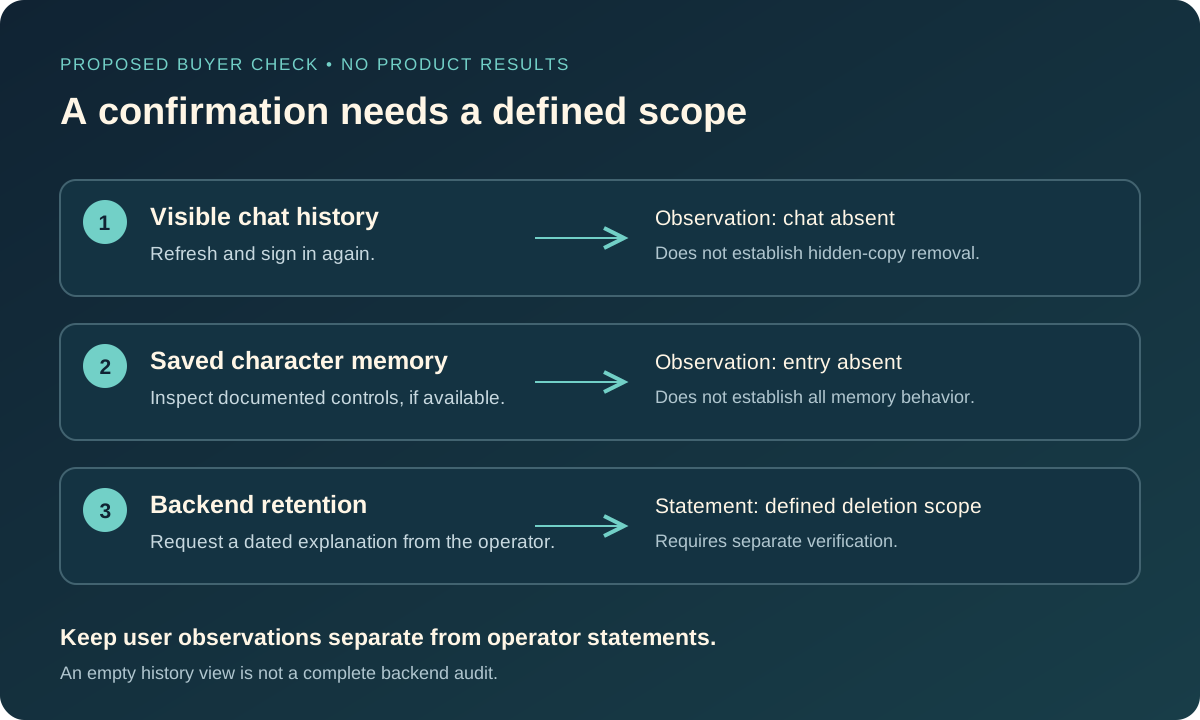
Sign out and reopen the account through its normal sign-in process. Check whether the conversation remains absent from the history you can access. If the product provides search, look for the distinctive phrase there too. These proposed checks inspect account-visible behavior; they cannot demonstrate that an operator removed backups or internal logs.
If you use a second device, inspect its normal synchronized history after reconnecting it. A conversation visible only in an old offline view might reflect a local copy. Record whether the device was online and whether you refreshed the app. Ask support to explain the discrepancy instead of immediately labeling it a server-deletion failure.
Treat saved memory as a separate question
Open a memory-management screen if the product documents one. Look for the fictional postcard preference after deleting the conversation. If the preference remains, record that observation and check whether the documented deletion scope excludes memory. The observation can reveal a mismatch with your requirement without proving that the service broke its stated policy.
Avoid treating a character's next reply as your only memory check. Asking “What do I collect?” might produce a guess, especially if your question includes clues. Prefer an inspectable saved entry when available. If there is no such interface, ask how users can identify and remove saved facts, and leave verification unresolved until you receive an answer.
Consult the locally known NSFWAITool privacy checklist for adult AI tools as a reference destination for your review. Bring a scoped question to support: “Does deleting a conversation also remove facts saved to character memory?” Request a separate answer for each function you actually use, such as text chat and optional voice history.
Ask about the records you cannot inspect
Send the operator a question through its normal support channel: “What remains after I delete one conversation, and for how long?” Request a dated policy link or written explanation covering retained copies. If support answers only that the conversation disappears from history, ask whether that answer also covers internal storage. Keep unanswered parts marked unresolved.
Ask whether the deletion request reaches any external service that receives the chat content. For example, if documentation identifies a separate inference provider, request an explanation of what deletion covers at that provider. Do not invent a supplier relationship. Use the operator's actual documentation to decide which follow-up questions apply to your chosen feature.
If the operator describes a delay, record its documented duration and the event that starts it. Ask whether the deletion confirmation means the request entered a queue or completed processing. A delayed process might meet your needs, but only if its scope is clear. Do not substitute a made-up retention deadline for an unanswered question.
Compare evidence without pretending to audit the service
Use NSFWAITool's review methodology as a reference destination when organizing your notes. Give each observation an evidence label. For example, “chat absent after signing in again” is a user-observed result; “backup retention explained in a support reply” is an operator statement. Neither label should silently become an independent backend audit.
| Evidence you can collect | Decision it supports | Limit | | --- | --- | --- | | Chat absent from refreshed history | Visible removal worked in that check | Does not inspect hidden copies | | Fictional memory entry removed | That entry is no longer visible | Does not establish all memory behavior | | Dated retention explanation | Operator defines deletion scope | Statement needs separate verification |
Repeat the same harmless check if a result is inconsistent, using another fictional phrase. Record both outcomes instead of discarding the inconvenient one. Repetition can reveal a visible problem, but a successful repeat does not prove universal reliability. Stop adding personal material while the behavior that matters to you remains unexplained.
Choose the candidate whose documented scope matches your requirement and whose visible behavior supports it. For example, if you need separate memory removal, require a usable documented control or a clear supported process. Treat an unresolved backend answer as a purchase limitation. A reassuring confirmation alone is too little evidence for a strong deletion claim.
FAQ
Does a deleted chat mean every copy is gone?
No conclusion about every copy follows from an empty history view alone. Refresh the account and confirm the conversation is absent, then ask the operator what happens to retained records. For example, request separate explanations for saved memory and backups. Record the answer's scope rather than extending it to unmentioned systems.
Can a consumer run ThinkingBox to audit a companion?
The announcement describes a benchmark for business workflows, not a consumer audit of companion storage. Use the principle to define an observable outcome, such as removing a fictional chat from history. Ask the operator for evidence about inaccessible records. Running a separate benchmark would not reveal that service's actual deletion process.
What should I put in a deletion test conversation?
Use invented content with a distinctive phrase, such as a fictional cafe with violet umbrellas. Avoid personal photographs or intimate disclosures. Save the conversation title and test date, then use the documented deletion control. Check refreshed history afterward, keeping the result limited to the behavior you could actually observe.
Should I trust a character saying it forgot something?
A character's reply is insufficient evidence that a saved record changed. Open the documented memory controls if available and inspect the fictional entry directly. If no inspection is possible, ask support how users remove saved preferences. Keep the character's response separate from any claim about what the storage system contains.
What if support will not explain deletion scope?
Mark the unanswered question as unresolved in your comparison notes. If your requirement is removing saved preferences, ask specifically for the supported control and its scope. Choose another candidate when that uncertainty conflicts with your intended use. Do not infer a retention policy from silence or from a successful visible-history check.