
<!-- Editorial review: Sheet AI 新闻日报, AI 新闻 A:F read on 2026-10-06 UTC. Five eligible rows collected at 08:02 UTC. Folder listing confirms spreadsheet identity. Selected textGrain announcement dated October 5. Primary intent: buyer checks for provenance of shared AI roleplay text, distinct from local drafts about deletion, data recipients, desktop permissions and model costs. North 2 and TikTok concern enterprise workflows or commerce; visual ads concern a general image product; Google's privacy report overlaps recent privacy coverage more closely. All five required NSFWAITool page checks failed in web; homepage curl also failed DNS. Internal destinations are locally known references, with link currency and live cannibalization check pending editor review. No current category inventory asserted. Source does not establish adult generation capability or any companion integration. Procedures and fictional examples below are editorial proposals, not completed tests. Cover created with built-in image generation; exact prompt recorded in cover-prompt.txt. -->
AI Roleplay Text Watermarks: What Buyers Should Check
If you plan to share excerpts from an adult AI companion, ask how the service documents the origin of exported text before buying. For example, a public character sample needs an understandable AI disclosure, while a private fictional conversation may never need to leave your account. Prefer a product that explains its export behavior over one that merely advertises a detection badge.
What the textGrain announcement actually establishes
OpenAI's October 5 text provenance announcement introduces textGrain, an invisible statistical signal in word choices. It offers global API opt-in for selected models, off by default, and plans eligible EU ChatGPT and Codex watermarking over coming weeks. Initial detector access is restricted to approved researchers and expert organizations.
OpenAI reports about 80% detection for 200-token passages and 95% for 400-token passages in content such as psychology, at a target 1% false positive rate. These are vendor evaluation results, not roleplay tests. The company says short text, editing and translation limit detection; the signal neither identifies users nor proves ownership or accuracy.
For a buyer, the immediate task is narrower: ask whether the specific companion feature you want has documented provenance behavior. An operator's use of some OpenAI technology would still leave the relevant model and configuration unanswered. The announcement establishes no adult-tool integration, and it provides no evidence that a general model supports adult content.
Match the buying question to what you will share
Write down your actual use case before comparing subscriptions. For example, you might want to post a fictional character's greeting to a community forum, or export a longer story for personal editing. Ask about those exact actions. A seller's answer about generated profile images cannot settle what happens to copied chat text.
For a community post, read the destination's rules and prepare a plain disclosure such as “AI-assisted fictional dialogue, edited by me.” Use that wording only when it accurately describes your process. If the destination requires a different label, follow its instructions. Do not buy a provenance feature before knowing which information your intended audience needs.
Start a shortlist through NSFWAITool's AI tool directory, then examine each candidate's own export documentation. Record whether the supported action is copying a reply or downloading a conversation. If a listing supplies only a demonstration screenshot, ask for instructions showing how an ordinary subscriber can obtain the same export.
Ask for feature-specific evidence before paying
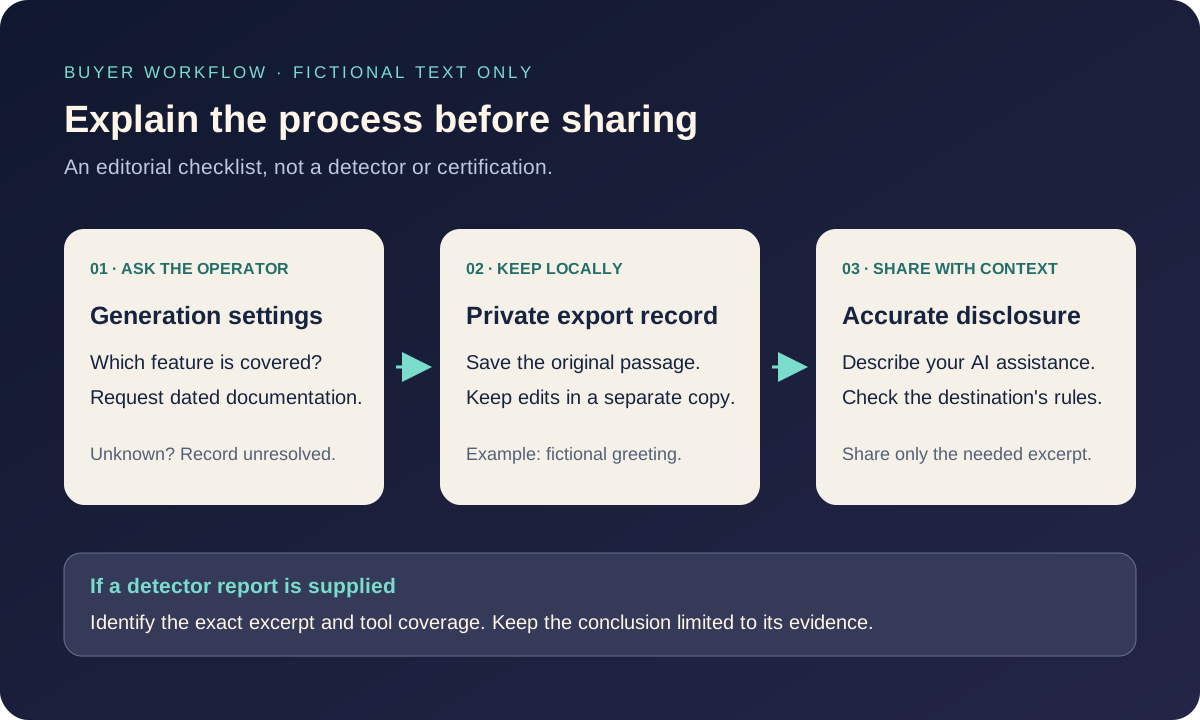
Send the seller a concrete question: “For text exported from this character-chat feature, what origin information is preserved?” Request a dated documentation link. If the answer names a watermark, ask which generation setting enables it and whether the explanation covers your subscription. Keep an unanswered field labeled “unresolved” rather than filling it with a plausible technical guess.
Ask separately what “verified AI” means in a promotional badge. For example, the badge might describe an operator's declaration rather than a detector result. Request the issuing tool and its supported input type. A badge without a clear explanation should contribute no evidence to your comparison, even if its design resembles a certificate.
If an operator offers a public sharing link, ask what viewers can see before using it. Request a fictional demonstration containing no personal information. Compare the demonstration with the documented export behavior, and retain the answer locally. This proposed check assesses the sharing feature; it does not inspect the service's internal generation pipeline.
Keep a private record of the writing process
Create a harmless example involving invented adults meeting at an imaginary bookshop. Save the generated passage locally if the service permits export. Name the file with the date and feature used, then keep an edited copy separately. That gives you a practical way to explain which words you revised without exposing a real intimate conversation.
Add a short process note beside the files: “Generated character greeting; I rewrote the final sentence.” Record only the information relevant to the excerpt. Avoid placing your login identifier in the note. For a later editorial submission, you can describe the assistance accurately without sending someone your entire account history.
If you translate the excerpt, preserve the original and record who or what produced the translation. For example, label the new file “English adaptation of fictional greeting.” This is a recordkeeping proposal, not a detection workaround. Describe the process openly instead of making a claim about whether a changed passage will trigger a particular detector.
Treat detector reports as scoped evidence
If a reviewer supplies a detector report, ask which exact excerpt it assessed. A result for a complete fictional story cannot automatically describe one sentence copied from it. Request the report date and the detector's stated coverage, then record what the reviewer actually concluded. Do not attach a broad authorship claim to an unidentified tool's score.
For a disputed community post, compare the submitted excerpt with your saved copy and editing note. Explain the work you can document, such as replacing a generated greeting with your own opening. Ask the moderator what additional evidence their process accepts. A private process record is useful context, but it does not compel a platform to accept a submission.
Keep file verification separate from text verification. OpenAI's content provenance API reference describes checking image or audio files. If a seller points to that endpoint as evidence about a pasted character reply, request documentation for the text claim. The presence of an image verification tool does not answer a text-export question.
Avoid adding a new recipient to an intimate chat
Before submitting any text to a third-party checker, inspect what it says about submitted content and retention. Use the locally known NSFWAITool privacy checklist for adult AI tools as a reference destination for this review. Try a fictional greeting first if a trial is appropriate; leave real personal disclosures out of the experiment.
If someone requests an entire private chat to verify a public excerpt, ask whether the excerpt and a minimal process note will suffice. For example, a sample about an imaginary cafe should not require unrelated personal messages. If the requester cannot explain the scope, pause the submission and keep your full conversation private.
Make the purchase decision from documented behavior
Organize your notes using NSFWAITool's review methodology as an editorial reference. Distinguish an operator statement from your own observation, such as successfully downloading the fictional greeting. Record the date beside each. A working download demonstrates that action in your check; it does not independently verify an invisible signal.
| Buyer requirement | Evidence to request | Decision limit | | --- | --- | --- | | Share a character sample | Export instructions and destination rules | Rules may differ between communities | | Explain edits | Private original and process note | Record describes your workflow | | Assess a watermark claim | Feature-specific documentation | Seller statement needs separate verification |
Choose according to the action you need. If you only want private fictional chat, give an advertised provenance badge little weight compared with usable conversation controls. If public excerpts matter, require an understandable export process and prepare an accurate disclosure. Leave a candidate's unexplained watermark promise unresolved rather than paying extra for it.
FAQ
Can I check my roleplay with OpenAI's text detector today?
Do not assume access from the announcement alone. Ask the service offering a check to document its authorization and supported input. For a fictional character greeting, you can first keep a local copy and process note. Those steps require no detector account and give you context to explain your writing workflow.
Does an AI companion inherit watermarking from its model supplier?
Request an answer for the exact feature and configuration instead of inferring behavior from a supplier name. For example, ask whether copied replies and downloadable conversations follow the same documented process. If the seller cannot provide a dated explanation, mark the claim unresolved and compare candidates using evidence you actually have.
Should I upload a private adult chat to a detection website?
Review the website's submission handling before uploading anything. A fictional exchange about a bookshop is a better initial example than a personal disclosure. If a reviewer needs evidence about a public excerpt, offer that excerpt with a minimal process note first. Keep unrelated messages private while you clarify the request.
How should I label a story that I edited after generation?
Use wording that describes your actual contribution, then check the destination's rules. For example, “AI-assisted fictional dialogue; opening rewritten by me” explains a specific process. Keep the original locally alongside your revision. Do not describe the entire story as independently written if your saved record shows substantial generated passages remained.
Is a provenance badge a reason to buy a more expensive plan?
Ask what the badge adds to your intended workflow before spending more. For a public character sample, export instructions may answer your practical question better than an unexplained emblem. Request documentation covering the plan you are considering. Compare the supported action with your requirement and leave unsupported claims out of the purchase decision.