<!-- Editorial review: Selected AI 新闻 row collected 2026-10-01 08:09 UTC, ElevenLabs employee tender announcement dated 2026-09-30. Read A:F and confirmed the spreadsheet in the specified Drive folder. Strongest fit: documented speech technology and downstream voice companion permissions. Other rows cover general AI investigations, protein provenance, robotics and agent infrastructure. Original announcement opened successfully after initial failures; policy and privacy scope checked live. No companion integration or adult capability established. Homepage, /blog, attempted /category/ai-companions/, review methodology and privacy guidance were inaccessible; direct curl failed DNS. Live cannibalization and category verification remain unresolved. Local September 29 and 30 drafts target general speed/cost and image composition; this draft targets voice provider permissions and AI disclosure. Internal destinations reuse local context without claiming their current contents or availability. Editor must verify those links and the live article inventory. Proposed checks are not performed product tests. Cover: built-in image generation, conceptual smartphone, abstract voice wave and verification card; no logos, explicit imagery or measured waveform. Diagram: original SVG decision aid. -->
ElevenLabs Voice AI: Check Companion Permissions Before Paying
If you are choosing a voice-enabled AI companion, verify the voice provider and permitted use before buying access. A convincing sample greeting establishes neither. For example, a fictional adult character may speak naturally in a demo while its app supplies no evidence that the same voice is authorized for your intended conversations. My judgment: treat unclear permission as a reason to postpone a voice upgrade.
What the ElevenLabs announcement establishes
In its September 30 employee tender announcement, ElevenLabs reports a $300 million transaction valuing the company at $22 billion, led by Wellington and T. Rowe Price. That financial event does not certify any companion app. If an app uses the valuation in its sales pitch, ask for evidence of its actual voice integration instead.
The announcement names Eleven v4 and v4 Turbo text-to-speech models. ElevenLabs describes them as its fastest and most emotive models and points to independent benchmarks. This draft has not evaluated those benchmarks or tested either model. Request the exact deployed version when a companion advertises an ElevenLabs upgrade; the announcement alone cannot verify what that app delivers.
Text-to-speech converts written material into spoken audio. In a hypothetical companion workflow, another component could write the character's reply before the speech engine reads it. Ask whether the named provider handles only speech or the complete conversation. Expressive delivery does not establish accurate memory, and this news supplies no evidence of adult image or video capability.
Why provider identity matters for adult companion buyers
When comparing candidates through NSFWAITool's AI tool directory, start with the voice feature you will actually use. For example, distinguish prerecorded character greetings from spoken replies generated during a chat. Ask support which feature uses which supplier. A greeting labeled “AI voice” leaves that distinction unresolved and gives you little basis for choosing a recurring plan.
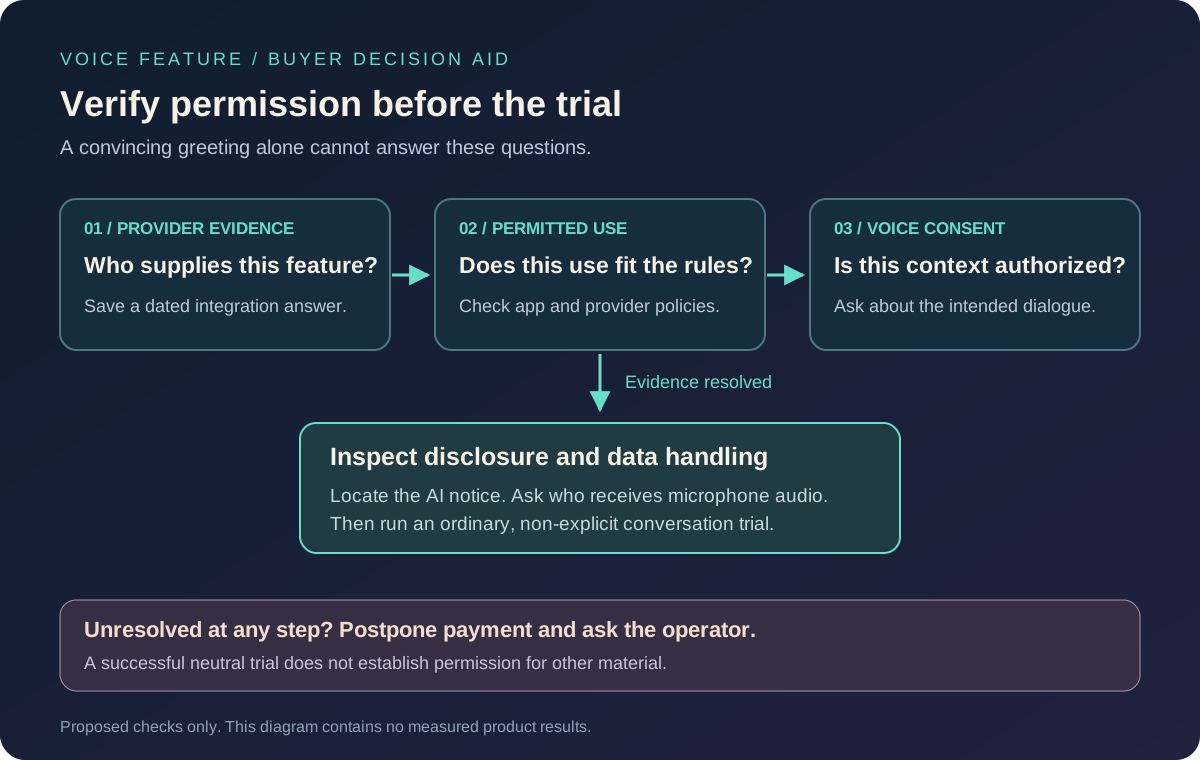
Keep a dated evidence note for the integration. Save the relevant product documentation and the support reply identifying the provider. If support declines to name it, write “provider unconfirmed” beside that candidate. You can still judge a demo's sound, but you cannot apply ElevenLabs' rules to an unidentified backend or describe its permissions as verified.
Check whether the plan includes the voice mode shown in the demonstration. Open the checkout details and find the feature description before entering payment information. A hypothetical demo could showcase continuous voice conversation while the selected plan offers only individual audio messages. Record the actual entitlement, then decide whether it meets your intended use without assuming the demonstration represents every tier.
Read the rules that apply to the voice
The ElevenLabs prohibited-use policy, updated August 17, 2026, restricts unauthorized or harmful impersonation, including unauthorized sexualization, and requires prominent AI disclosure for agents. It also says downstream offerings cannot use less restrictive end-user terms. An app's “uncensored” label therefore supplies no evidence that an underlying provider authorizes its advertised use.
Open both the companion's acceptable-use page and the identified provider's policy. Search for the language relevant to your intended lawful adult interaction, then ask support about any ambiguity using a non-explicit description. Save the answer alongside the policy date. Do not interpret silence about a particular scenario as affirmative permission, or submit prohibited material to see whether enforcement catches it.
Distinguish voice authorization from permission for a conversation topic. For example, permission to use an actor's voice for ordinary character greetings does not establish permission for intimate dialogue. Ask the operator whether its authorization covers the context it markets. You do not need the actor's private contract, but an unsupported “all voices licensed” slogan leaves the scope unconfirmed.
Check AI disclosure where the conversation starts
Before using a trial, inspect the first screen and the opening voice interaction for a clear statement that the speaker is AI. Take a screenshot of the notice or write down its exact location. A disclosure found only after opening several help pages gives you a different user experience from a notice beside the call button; record what the interface actually shows.
Try a neutral question such as “Are you an AI character?” and note the response. This is a proposed interface check, not proof that the operator meets every contractual obligation. If the voice claims to be a real person, save the example and ask support to explain it before buying. A personable fictional identity should remain distinguishable from a human operator.
Trace microphone audio separately from chat text
Make a simple record of the information each mode requires. For example, a typed message played aloud may differ from a microphone conversation that starts with your recording. Ask the companion operator which companies receive audio and whether transcripts are retained. Do not assume the supplier generating the reply's voice also receives your microphone recording; request that detail explicitly.
The ElevenLabs privacy policy's scope section distinguishes direct-user processing from processing on behalf of business customers, which is governed by their applicable agreement. Consequently, reading the direct-user policy cannot settle every downstream app's handling of your conversation. Obtain the companion's own retention explanation before treating a supplier's privacy page as your complete answer.
Use the locally known NSFWAITool privacy checklist for adult AI tools as a starting point for your questions. Ask specifically about deleting recordings and deleting transcripts. For example, removing a visible chat might leave a separate audio history; record the operator's answer for each data type rather than treating a vanished message as evidence that every copy was erased.
Run a non-explicit trial after resolving permission
Use a fictional adult character and an ordinary script, such as “Let's plan a quiet evening at home.” Begin with a supplied voice rather than uploading another person's recording. Keep the text constant when comparing voice options, and note whether words remain intelligible at your normal listening volume. This checks the accessible experience without introducing sensitive inputs during your first trial.
If the candidate offers interactive voice, interrupt politely with “Please stop, I'd like to change the topic.” Observe whether playback stops and whether the next response follows your request. Record interruption behavior separately from pronunciation. A clear voice can still be unsuitable for a conversational purchase if the interface keeps speaking over your attempt to pause it.
Repeat the same ordinary exchange on the device you expect to use. For example, compare a phone's built-in speaker with your usual headset and record the microphone permission prompt. Keep any notes local. These are proposed checks, with no measured results in this draft; they should help you document practical fit without turning one successful exchange into a universal reliability claim.
Decide whether the voice upgrade has enough evidence
Use NSFWAITool's review methodology as an editorial reference when recording the candidate's evidence. Label each integration answer confirmed or unresolved, and attach its dated source. For example, a support reply naming a provider resolves identity but does not automatically resolve permission for the particular voice. Keep those decisions separate in your notes.
Proceed only when the documentation answers your intended use and the accessible trial meets your conversational requirements. If an app cannot explain its voice authorization, postpone the voice plan even when the demo sounds excellent. The ElevenLabs transaction is a useful prompt to inspect a voice feature; a verified integration and a clear permission scope are the evidence relevant to your purchase.
FAQ
Does ElevenLabs' valuation confirm that a companion app is authorized?
No. Ask the app operator for documentation identifying its voice provider and explaining the relevant integration. A financial announcement cannot verify a separate app's permissions. For example, a promotional reference to ElevenLabs could concern one demo rather than the voice feature included in the subscription you are considering.
Does this announcement establish support for adult conversations?
The announcement supplies no affirmative evidence for your intended adult use. Read the app's rules and the identified provider's policy, then ask support about ambiguous cases without submitting sensitive content. For example, an expressive fictional character greeting does not establish permission for every conversation topic or every voice identity.
Can I upload someone else's voice for a companion character?
Do not treat possession of a recording as authorization for that use. Before uploading, establish the person's permission for the specific context and check the service's current requirements. For an initial trial, select a supplied fictional voice instead. A recording shared for an ordinary greeting leaves other uses unresolved.
Does deleting a chat also delete microphone recordings?
Ask the operator rather than inferring deletion from the interface. Request separate answers for audio recordings and transcripts, including any retention after deletion. For example, a disappearing message confirms only the visible change you observed. Use a non-sensitive trial exchange while you establish what the deletion control actually covers.
How can I judge a voice feature without testing explicit content?
Use a short ordinary script with a fictional adult character, then ask the voice to stop and change topic. Record intelligibility and interruption behavior separately. These checks assess the available interface without sensitive inputs. Resolve permitted-content questions through documentation and support; a successful neutral trial cannot establish permission for other material.