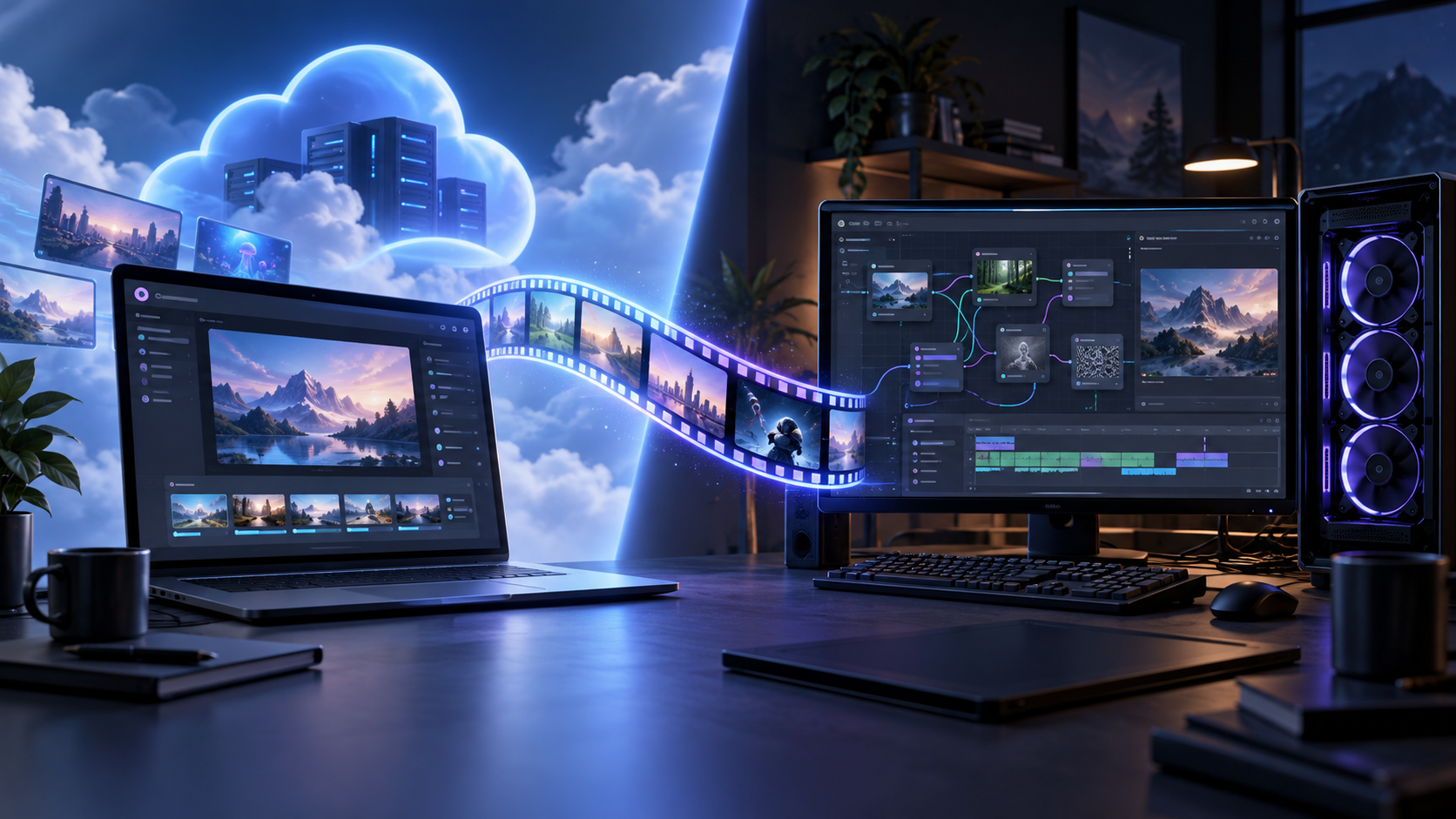
An AI Porn Video Generator can turn a written concept or a reference image into a short AI-generated clip. There are two main ways to approach the process: use a hosted tool, or run a video model on your own hardware. The hosted route is quicker. A local workflow gives you more control over your files, settings, and editing process, but it takes considerably more setup.
This guide explains both routes, compares five publicly available video-model families, and walks through a beginner-friendly local workflow. Before you begin, use only fictional adults or real adults who have explicitly consented to the use of their likeness. Check the model license, the tool's content rules, and the laws that apply where you create or publish the video.
Method 1: Use an Online AI Porn Video Generator
If you want to experiment without installing software, start with a hosted service. The AI porn video generator directory is a place to compare available tools. Review each tool's current rules before uploading material: listings do not guarantee that every service permits the same content or offers the same features.
A simple hosted workflow looks like this:
- Choose a tool and check its policy. Confirm what it permits, how it handles uploaded images, whether outputs are private, and what download or commercial-use rights you receive.
- Choose text-to-video or image-to-video. Text-to-video starts from a description. Image-to-video animates an image that you own or have permission to use.
- Describe the shot clearly. Specify that all depicted people are adults, then describe the setting, framing, lighting, camera movement, duration, and visual style. Keep the direction consistent rather than packing several scenes into one request.
- Generate a short draft. Preview a few seconds first. Check continuity, anatomy, motion, and whether the result matches your intended composition.
- Refine and export. Change one or two variables at a time, save the best version, and confirm the output format and usage rights before publishing.
Hosted tools are convenient, but they may impose content restrictions, credit limits, queues, watermarks, or retention policies. Read their current terms rather than assuming that “AI video” means unrestricted adult output.
Method 2: Build a Local Workflow with Open-Weight Video Models
Running a model locally means that the generation pipeline runs on hardware you control. This can make it easier to manage source files and experiment with settings. It does not automatically make any use lawful or permitted: model licenses, distribution rules, and consent requirements still apply. Also, “open-weight” means that model weights are available; it does not necessarily mean that every component is open source or that every model can run on an ordinary laptop.
Five video models worth evaluating
| Model | Why creators consider it | Local-use note |
|---|---|---|
| Wan 2.2 | Text-to-video and image-to-video variants, including a 5B hybrid model. | A practical starting point because ComfyUI has an official Wan 2.2 workflow. |
| MiniMax H3 | Multimodal video generation with synchronized audio and several input modes. | Its local base model and full hosted pipeline are different; read the official repository before choosing a route. |
| LTX-2 | Audio-and-video generation, keyframe controls, and ComfyUI integration. | Check the particular release's community license and substantial model-download and hardware needs. |
| HunyuanVideo 1.5 | Text-to-video and image-to-video workflows in a more compact 8.3B-parameter model. | Its official repository provides code, weights, and setup guidance. |
| CogVideoX 1.5 | An established text-to-video and image-to-video model family with public code and checkpoints. | Confirm the license and hardware requirements of the exact checkpoint you select. |
These are general-purpose video models, not a promise that each model or its hosted interface supports explicit adult content. Their capabilities, licenses, and acceptable-use terms can differ by checkpoint and provider. For a first local test, Wan 2.2's 5B hybrid workflow has particularly clear, official ComfyUI instructions.
What you need to configure
- Hardware: A compatible GPU is the main constraint. ComfyUI's Wan 2.2 guide says its 5B workflow can fit on an 8 GB VRAM card with native offloading; larger models often need considerably more memory. Leave enough disk space for model files, previews, and finished clips.
- Software: Install a current ComfyUI release or use the installation route supported by your operating system and GPU. Keep the application and graphics drivers current.
- Model files: Download the exact diffusion model, text encoder, and VAE named in the official workflow. Put each file in the matching ComfyUI model directory. A missing or mismatched component is a common cause of failed runs.
- Output settings: Start with a short clip and moderate resolution. Choose an aspect ratio for the final destination, and save your settings so you can reproduce a good result.
- Source material: Use original artwork, licensed assets, or images of consenting adults. Avoid a real person's face, voice, or likeness without specific permission.
A simple local setup tutorial: Wan 2.2 in ComfyUI
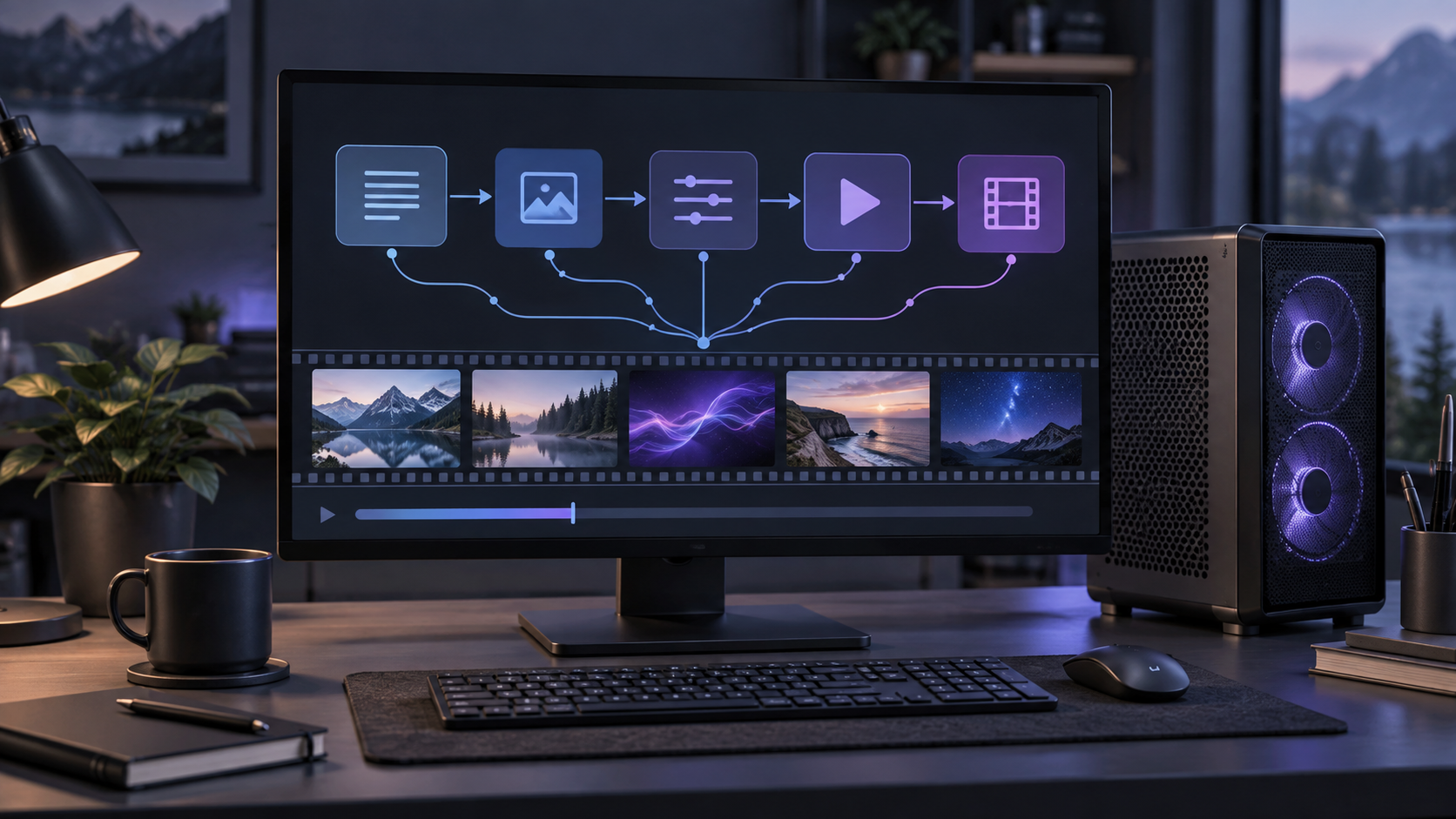
- Install ComfyUI for your system and make sure it detects your GPU.
- Update ComfyUI, then open Workflow → Browse Templates → Video and load the Wan 2.2 5B video generation template. ComfyUI also provides a downloadable workflow file in its official tutorial.
- Download the three files listed for that template: the Wan 2.2 5B diffusion model, its text encoder, and its VAE. Place them in
models/diffusion_models,models/text_encoders, andmodels/vae, respectively. - In the workflow, confirm that each loader points to the file you downloaded. Add a permitted reference image only if you want image-to-video; otherwise, use the text-to-video path.
- Enter a concise visual description, set a short frame length, and run the workflow. Preview the result before increasing duration or resolution.
Follow the current ComfyUI instructions if a model filename or node changes. If a workflow opens with missing nodes, update ComfyUI and reload the official template.
A simple production workflow
Think in shots, not an entire finished film. First write a one-sentence concept and define the adults depicted, setting, mood, framing, and camera movement. Create one short draft shot. If you use an image reference, verify that you have the right to use it. Review the preview for continuity and unwanted artifacts, then adjust a single setting or phrase and render again. Once a shot works, make additional shots in the same style, edit them together in a video editor, add only audio you are licensed to use, and export in the format you need.
This staged process is easier to control than asking one model run to create a long, complex sequence. Keep project files and final outputs private until you have checked consent, licensing, and the rules of the platform where you intend to share them.
Conclusion
The easiest way to make an AI-generated adult video is to try a hosted AI Porn Video Generator and compare its policies, privacy controls, and output quality. A local model workflow takes more time but gives experienced creators deeper control. Wan 2.2 is a sensible first local experiment because its setup is documented in ComfyUI; MiniMax H3, LTX-2, HunyuanVideo 1.5, and CogVideoX 1.5 are other models to evaluate against your hardware and licensing needs. In either route, consent and age verification should be part of the workflow from the start.
FAQ
Can I make an AI porn video without installing software?
Yes. A hosted generator runs the model for you. Compare tools in the AI porn video generator directory and verify each service's current content rules, privacy policy, and output rights.
What is the easiest open-weight model to try locally?
For beginners following official instructions, Wan 2.2's 5B ComfyUI template is a reasonable starting point. The best model for you still depends on your GPU, desired quality, and the exact model license.
Is MiniMax H3 an open model I can run locally?
MiniMax publishes H3 model resources and local guidance, but its full 2K workflow also uses separate official services. Read the MiniMax H3 repository to understand which parts you can run locally and what hardware they require.
Does “open-weight” mean unrestricted NSFW use?
No. Weight availability, model licensing, service policies, and the law are separate questions. Check each one for the specific model and distribution channel you plan to use.
Can I use a real person's photo or voice?
Only with that adult person's explicit permission for this particular use. Never create or share sexualized likenesses of minors, and do not use someone else's identity without consent.