
<!-- Editorial review, 2026-10-04 UTC: Selected Kolibri from today's five eligible AI 新闻 rows; spreadsheet and folder verified. Official announcement and model card verified October 3 release. Primary intent: self-hosting feasibility for text chat, distinct from existing local drafts. NSFWAITool homepage, blog, attempted chat category, methodology and privacy guidance inaccessible; DNS also failed. Internal links reuse local context and require editor verification; live cannibalization unresolved. No adult suitability, integration or independent performance established. Suggested trials unperformed; SVG is a decision aid. Cover generated with built-in imagegen: unbranded server, laptop with blank speech bubbles and open modular block; matte 3D, soft lighting, wide composition; no text, logos, people or explicit imagery. -->
Kolibri for Self-Hosted AI Chat: What Adult Tool Buyers Should Check
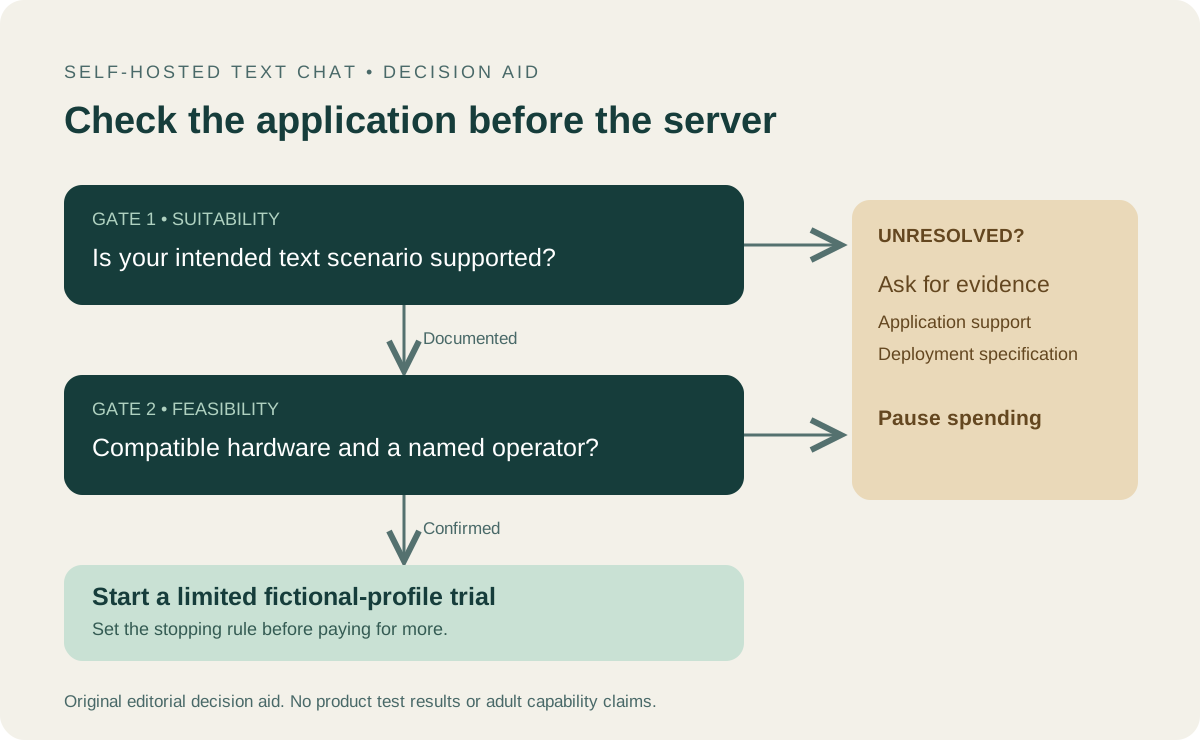
Kolibri merits investigation if you are comparing self-hosted text-chat setups, but the release alone gives no reason to replace a working adult AI companion. Start by asking whether your intended conversation is supported and whether you can operate the model. A fictional date-planning chat is a reasonable first trial; a launch headline is insufficient evidence for buying hardware.
What the October 3 release actually establishes
Aleph Alpha's original Kolibri announcement is dated October 3, 2026. It describes downloadable weights under Apache 2.0 and an English-German language model. Its performance comparisons are vendor-reported evaluations. For example, the published math results cannot establish whether a fictional character stays consistent across a conversation; that requires a different evaluation.
The official Kolibri model card specifies 78.1 billion total parameters and about 3.46 billion active per token. It lists an approximately 78 GB FP8 model footprint and supported server-class hardware, including one H200. Treat those figures as a feasibility check before allocating a spare desktop to the project, rather than assuming the active count describes the memory requirement.
For an NSFWAITool reader, the actionable question is whether controlling the text-model deployment is worth the operational work. Write down a concrete reason, such as keeping a fictional character session on infrastructure you administer. If your goal is simply opening a browser and chatting, ask a hosted candidate for its documented features before pursuing a server installation.
Open weights do not establish adult-chat suitability
The model card says training-data filtering excluded known adult and NSFW sites, and filtered sexually explicit English web text. This does not establish a particular refusal rate or roleplay ability. Mark adult-text suitability unresolved in your shortlist; do not relabel the model as an adult companion because its weights are downloadable.
Keep an intended-use example beside that unresolved entry. You might want a fictional adult character who maintains a gentle romantic tone without explicit material. Ask whether the actual application supports that scenario, then try the same non-explicit prompt in a permitted trial. Record the answer you receive rather than inferring compatibility from a model license.
When browsing NSFWAITool's AI tool directory, separate a finished chat product from a downloadable model. For a product, look for a working interface and a supported way to save a character. For a model, identify the software that will provide those functions. A weights repository alone does not answer your question about editing a character profile.
The verified sources describe text processing, not adult image or video generation. If a seller bundles a picture feature with chat, ask which separate component creates the image. Keep that feature outside your Kolibri text evaluation until the seller provides documentation. A screenshot of an illustrated character cannot establish what produced it.
Check deployment feasibility before renting hardware
Use the hardware section of the linked model card to ask a hosting provider for a compatible configuration. Request a written explanation of how it accommodates model weights and the context you intend to use. For example, specify a short character biography and a modest conversation history rather than requesting the maximum possible context by default.
The card supports up to 1,048,576 context tokens but recommends no more than 262,144 for serving efficiency and complex tasks. A larger context window is not a saved-memory feature. For example, test whether a character recalls a fictional favorite game within your actual session; do not assume that a headline context limit guarantees persistent memory after reopening the app.
Before making a purchase, ask who will maintain the installation. Write a specific recovery task into your decision note: “restore the service after a failed update.” If you cannot identify the person responsible or a supported recovery procedure, pause the hardware purchase. Installation instructions answer how to start a service; they do not provide someone to repair it.
Ask for a quote based on your proposed trial duration and the provider's actual billing terms. Include storage only if the configuration requires it, and ask whether stopped instances still incur charges. Do not compare an invented hourly rate with a companion subscription. Save the dated quote so that your eventual cost comparison uses prices you can verify.
Run a small text trial with a clear stopping rule
Prepare a fictional character profile before opening the trial: an adult museum guide who enjoys chess and prefers brief replies. Give the character a name unrelated to someone you know. Use that same profile in each setup you compare, so a difference in behavior does not merely reflect a more detailed prompt in one application.
Begin with a concrete instruction: “Suggest a quiet fictional date at a museum. Keep the reply under 80 words.” Save the output and note whether it follows your length request. Then ask a follow-up about the character's chess interest. These are proposed checks, not results from a Kolibri test, and they establish nothing about explicit-content support.
Introduce one controlled correction, such as changing the favorite game from chess to backgammon. Ask a later question that depends on the update, and record whether the response uses the new preference. If the interface exposes a separate saved-memory feature, inspect it too. Keep an observable conversation result separate from a claim about long-term character memory.
Set your stopping rule before spending more. For example, end the evaluation if the setup cannot preserve the profile through the specific session workflow you need. If it passes, extend the trial with another fictional profile. Do not compensate for repeated failures by changing several settings at once; you would lose the basis for comparing runs.
Verify what “self-hosted” means in the complete application
Draw the proposed setup on paper with a box for the chat interface and a box for inference. Ask where each box runs. For example, a browser interface might connect to a remote server you rent. Label that arrangement “self-managed remote inference” in your notes, rather than treating it as a laptop-only conversation.
Use NSFWAITool's privacy checklist for adult AI tools as an editorial reference for questions about the complete setup. Ask whether the frontend sends chat text to any external service. A fictional message such as “I prefer museum dates” gives you a harmless example to discuss with the operator without revealing an intimate preference.
Request a concrete description of session storage before using personal material. Ask where a saved transcript would reside and how to remove it. If the operator cannot identify that location, leave retention unresolved. Owning model weights gives you an artifact you can deploy; it does not supply evidence about another application's logging behavior.
When preparing comparison notes, refer to NSFWAITool's review methodology and label each entry by its evidence. “Provider documentation names the GPU” differs from “my trial completed a reply.” Preserve both observations with their dates. Avoid converting a successful short chat into a broad claim that the setup is secure or suitable for every adult use.
Decide whether to continue the self-hosting project
Continue only when you can identify a supported text scenario and a feasible deployment plan. Your next step might be a limited hosted-server trial using the fictional museum guide. If the adult-use question remains unanswered, ask the application operator to resolve it before paying. Kolibri is an infrastructure candidate, and the purchase decision still depends on the application you intend to run.
FAQ
Is Kolibri an NSFW AI chatbot?
The verified release describes a text model rather than a finished adult chatbot. Its announcement does not demonstrate adult roleplay suitability. Ask the operator of any proposed application whether your intended scenario is supported. For example, verify a fictional romantic conversation separately from the ability to download and run model weights.
Can I run Kolibri on my ordinary laptop?
Do not infer laptop compatibility from the smaller active parameter count. Check the model card's hardware requirements against your actual machine before downloading weights or paying for upgrades. Ask the deployment software provider for a supported configuration; an undocumented community experiment would need its own evidence before informing your purchase.
Does self-hosting mean my conversations stay on my device?
Only the actual deployment can answer that question. Ask where inference runs and where the interface stores transcripts. For example, a server you administer in a rented data center is still remote from your laptop. Request documentation for the complete application before describing your setup as device-local or sharing sensitive text.
Will a huge context window remember my character forever?
A context limit describes what can be supplied to a request; it does not promise saved character memory. Create a fictional preference, close the session, then reopen it using your intended workflow. Ask how the application restores prior information. Record the result without assuming every future session will behave identically.
Should I replace my existing companion subscription now?
Keep your current decision tied to a demonstrated need. If you want deployment control, compare a limited self-hosted trial against the workflow you already use. For example, check whether both setups preserve the same fictional character profile. Switch only after resolving suitability and obtaining an actual cost estimate for your proposed configuration.