<!-- Editorial review: Read connected AI 新闻日报, AI 新闻 A:F on 2026-10-08 UTC. Folder listing confirmed spreadsheet identity. Five eligible rows have column A collection timestamp 2026-10-08 08:02 UTC. Selected Google's public SynthID Detector release; original source explicitly dated October 7. Buyer intent: interpret provenance evidence in downloadable image-tool samples. Distinct from October 6 roleplay text export provenance and October 7 portrait editing consistency. Haiku pricing overlaps earlier model-cost coverage; general ChatGPT interfaces and local hardware lack demonstrated adult-product integration; biology has no genuine fit. Required homepage, blog index, attempted image category, review methodology and privacy guidance opens failed. Homepage shell request also failed DNS. Local references supply internal destinations only; their currency and full live cannibalization check remain pending editor review. Do not assert current listings. Sources verified: Google announcement, DeepMind SynthID overview, Google Gemini verification help. Gemini documentation is not documentation of the new standalone detector. No detector test performed; procedures below are proposals. No adult generation capability established. Built-in cover generation prompt stored in cover-prompt.txt. -->
SynthID Detector: Check AI Image Samples Before Buying
For adults comparing NSFW AI image tools, a sample gallery can raise a practical question: does this file contain evidence of AI generation? Google's public SynthID Detector offers a check for supported watermarks. My judgment: use that result as one evidence note before buying. A detected watermark in a clothed fictional portrait cannot establish that a seller's subscription produces the same result.
What Google's October 7 announcement confirms
Google's announcement of global SynthID Detector access says the tool became available globally in English on October 7, 2026. It covers images, video and audio from Google and named partners, including OpenAI, NVIDIA and Kakao; Apple support is described as coming later. These are vendor statements about coverage, not our independently measured detection results.
The release gives buyers a reason to inspect sample provenance, but does not establish explicit-content generation by those providers or integration with any adult service. For example, a seller's claim to use a named partner remains a separate claim. Request documentation identifying the feature and model behind the downloadable sample before connecting it to your intended purchase.
What a watermark result can answer
Google DeepMind's SynthID overview explains that the technology embeds imperceptible signals directly into generated media. It describes image and video watermarks as designed to withstand changes such as cropping and compression. That is a design claim. If you check a resized portrait, record the file version instead of assuming it behaves identically to the original.
Treat a detection result as evidence about a supported signal in the submitted file. It does not answer whether a fictional character stays recognizable across edits. To evaluate that requirement, request a reference portrait and a background-change example separately. A provenance check and a consistency demonstration address different reasons someone might pay for an image tool.
A result without a detected signal leaves the buying question unresolved. The file could come from a workflow outside the checker's coverage. Write “no supported signal reported for this file” in your notes rather than “real photograph.” If authenticity matters to your purchase, ask for an original file and an explanation of how the sample was produced.
Start with a sample you can trace
Choose a candidate through NSFWAITool's AI tool directory, then ask its operator for a downloadable, non-explicit example. A clearly adult fictional person wearing a coat is enough for an initial evidence check. Ask whether the example came from the feature available in your intended plan, since a gallery image alone does not document subscriber access.
Save the operator's answer beside the sample. Use a simple local note containing the download date and the advertised feature. For example, label the file “seller-provided portrait, reference editing demo.” Keep that label even if the detector reports a watermark; detection cannot establish who operated the generator or which account settings they used.
Prefer a supplied download over a screenshot when one is available. A screenshot of a gallery adds a different file to your evidence trail. If that is the only material offered, identify it as a screenshot and request the source image before drawing a purchase conclusion. Do not describe it in your notes as the seller's original export.
Run a bounded verification check
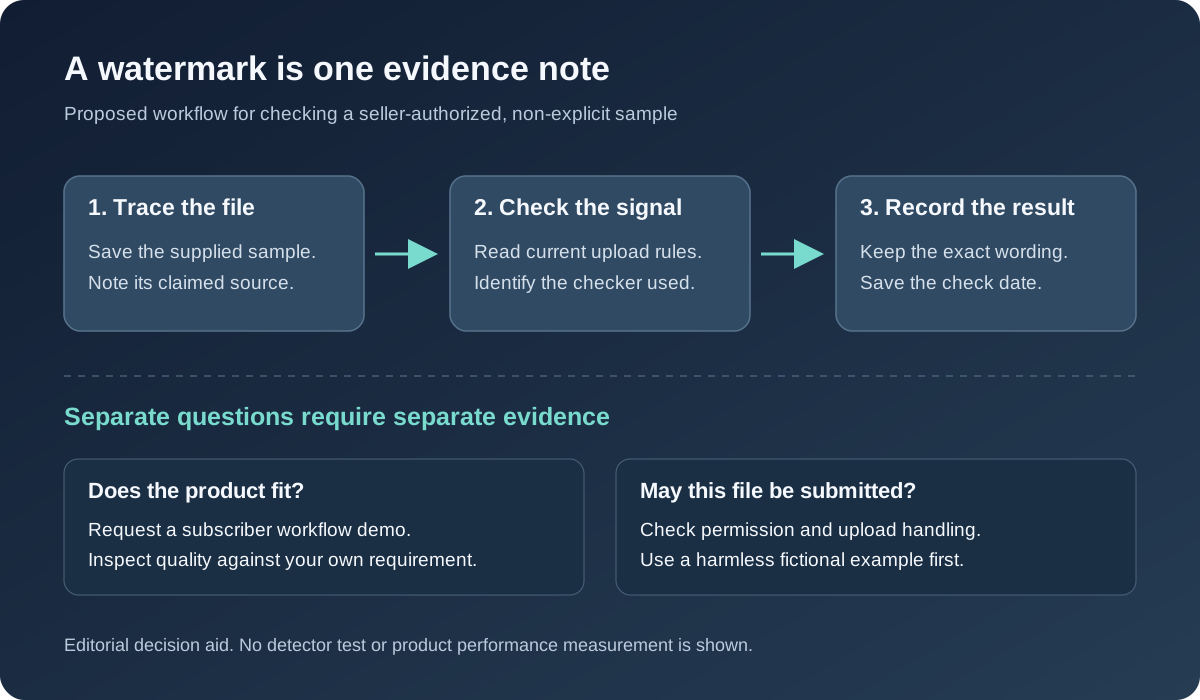
Open the standalone SynthID Detector and read its current instructions before submitting anything. Confirm that it accepts your file type and that its upload rules suit the example. The public announcement establishes media categories, but does not supply a complete operating manual. Follow the displayed requirements instead of assuming another Google application's limits apply.
Submit only a sample you are entitled to use, such as the seller-authorized fictional portrait. Save the exact result wording and the check date in your local note. If the interface rejects the file, record that rejection rather than treating it as a negative watermark result. This proposed procedure is an evidence workflow, not a report of testing performed here.
If you use Gemini instead, consult Google's Gemini media-verification instructions. They specify one file at a time, up to 100 MB, and describe Google-only SynthID recognition in that application. Do not carry the new standalone detector's partner coverage into a Gemini result. Identify the application you used whenever you share the finding.
Google's Gemini help also cautions that repeated alterations can make a watermark undetectable. For example, if your only copy has been repeatedly resized, ask for an earlier export. This limitation supports a cautious reading of an absent signal; it supplies no numerical failure rate for the standalone detector or your chosen adult image service.
Translate the result into a buyer question
Use the result to request a relevant demonstration. If the seller describes the portrait as a subscription output, ask them to show the generation or editing controls available to an ordinary subscriber. Record whether you saw a demonstration or accessed a trial yourself. An AI watermark in a promotional image cannot substitute for evidence that the advertised workflow is accessible.
| Evidence you have | Practical next question | | --- | --- | | Watermark reported in a sample | Can the seller demonstrate the advertised subscriber workflow? | | No supported signal reported | Can the seller provide the original export and production details? | | File rejected by the checker | Is there an accepted file version you may submit? | | Successful product demonstration | Does that feature meet your actual image requirement? |
Keep quality judgments tied to visible outcomes. For example, inspect whether the coat portrait has the composition you requested, then record that observation separately from detection. A successful provenance check does not make an awkward face acceptable. Choose a product based on its demonstrated ability to produce the kind of permitted image you need.
Use NSFWAITool's review methodology as an editorial reference when organizing evidence. Label the Google release as vendor documentation and a saved detector response as your observation. If you only reviewed a seller's screenshot of a result, label it seller-provided evidence. Those distinctions let an editor assess what your purchase recommendation actually rests on.
Check uploads and consent separately
Before sending media to any verification service, read its upload and retention information. Consult the locally known privacy checklist for adult AI tools as a reference for questions to ask. Begin with a harmless fictional example. Leave an intimate personal photograph out of the check while the service's handling of submissions remains unclear.
If a sample depicts a real person, request evidence of permission for its use independently of watermark detection. For example, a positive signal in an edited portrait says nothing about the subject's agreement to that edit. Keep permission questions in a separate note, and avoid uploading someone else's intimate image simply to settle whether AI was involved.
Decide whether the evidence justifies paying
For a buyer seeking reliable fictional profile portraits, the useful next step is a permitted product demonstration using a non-explicit reference. Check the output against your own requirement and ask how uploads are handled. If the seller offers only a watermarked gallery sample, postpone buying for the claimed workflow until they can show the relevant feature in use.
FAQ
Does a SynthID result prove a sample came from the advertised service?
No. A watermark result concerns the submitted media, while the seller's role in producing it remains a separate question. Ask for a demonstration using the subscriber interface and retain the original sample. For example, a detected signal in a coat portrait does not identify the account that generated it.
Can I treat an undetected watermark as proof of a real photograph?
No. Record the finding as an absent supported signal in that particular check. Ask the seller for an original export if you only have a screenshot. A result cannot settle every possible production workflow, so leave the file's origin unresolved when you lack evidence beyond the detector response.
Should I apply Gemini's upload limits to the standalone detector?
Read the standalone detector's own current instructions. Google's Gemini help gives limits for Gemini, including one file at a time and a 100 MB maximum. Those instructions do not establish the new portal's limits. In your evidence note, name the application used so an editor can interpret the result correctly.
Does public detector access mean Google supports adult image generation?
The announcement establishes access to a verification tool, not permission to generate explicit imagery. Ask a candidate adult service about the specific feature you intend to buy and read its content rules. A supported watermark in a non-explicit portrait supplies no evidence that a general model permits adult requests.
What should I save before making a purchase decision?
Keep the authorized sample file and the detector's exact response with a dated note. Add the seller's explanation of the advertised feature, clearly labeled as their statement. For example, distinguish a downloaded coat portrait from a trial output you created yourself. That record makes your buying judgment easier to review.